Mina Mirzaei

Scroll to explore
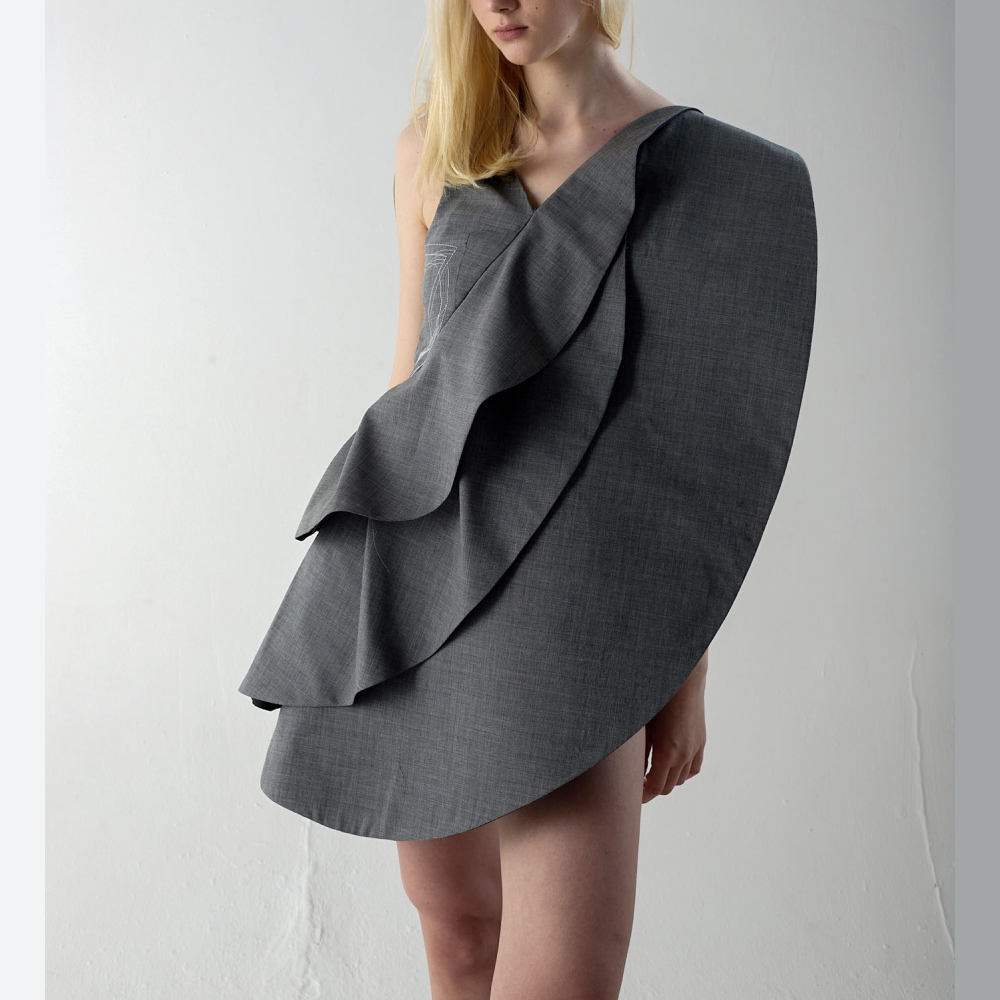
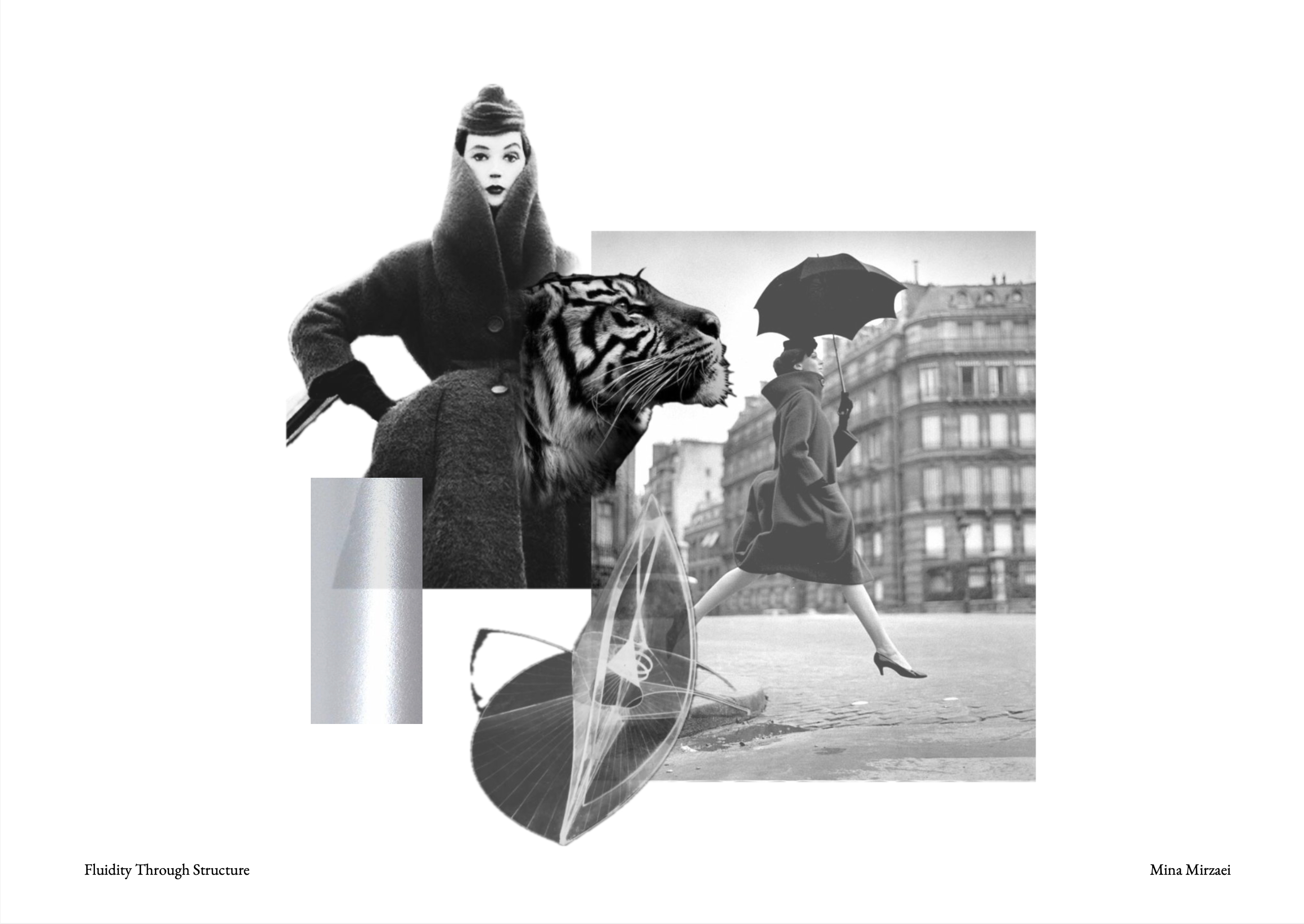
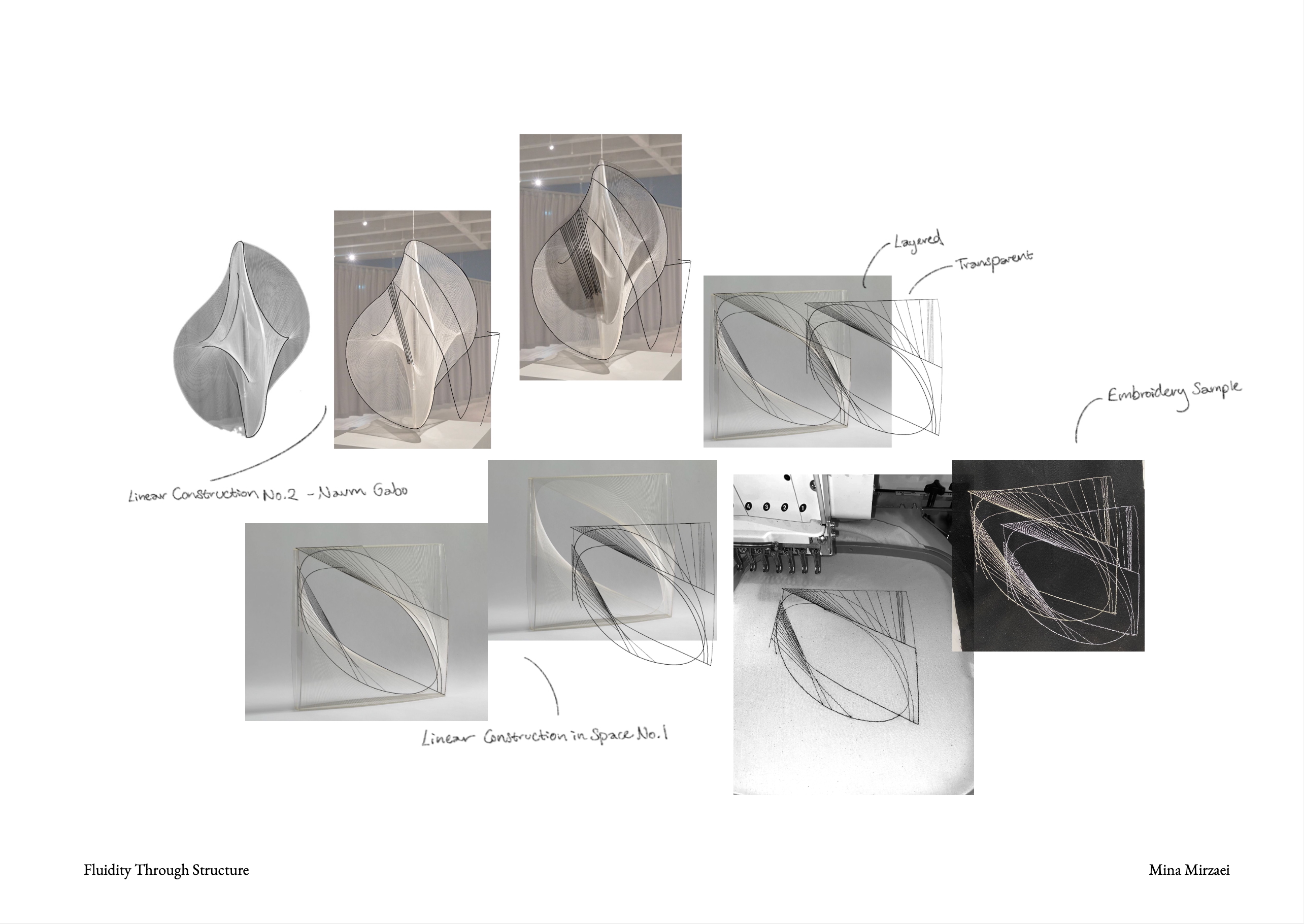
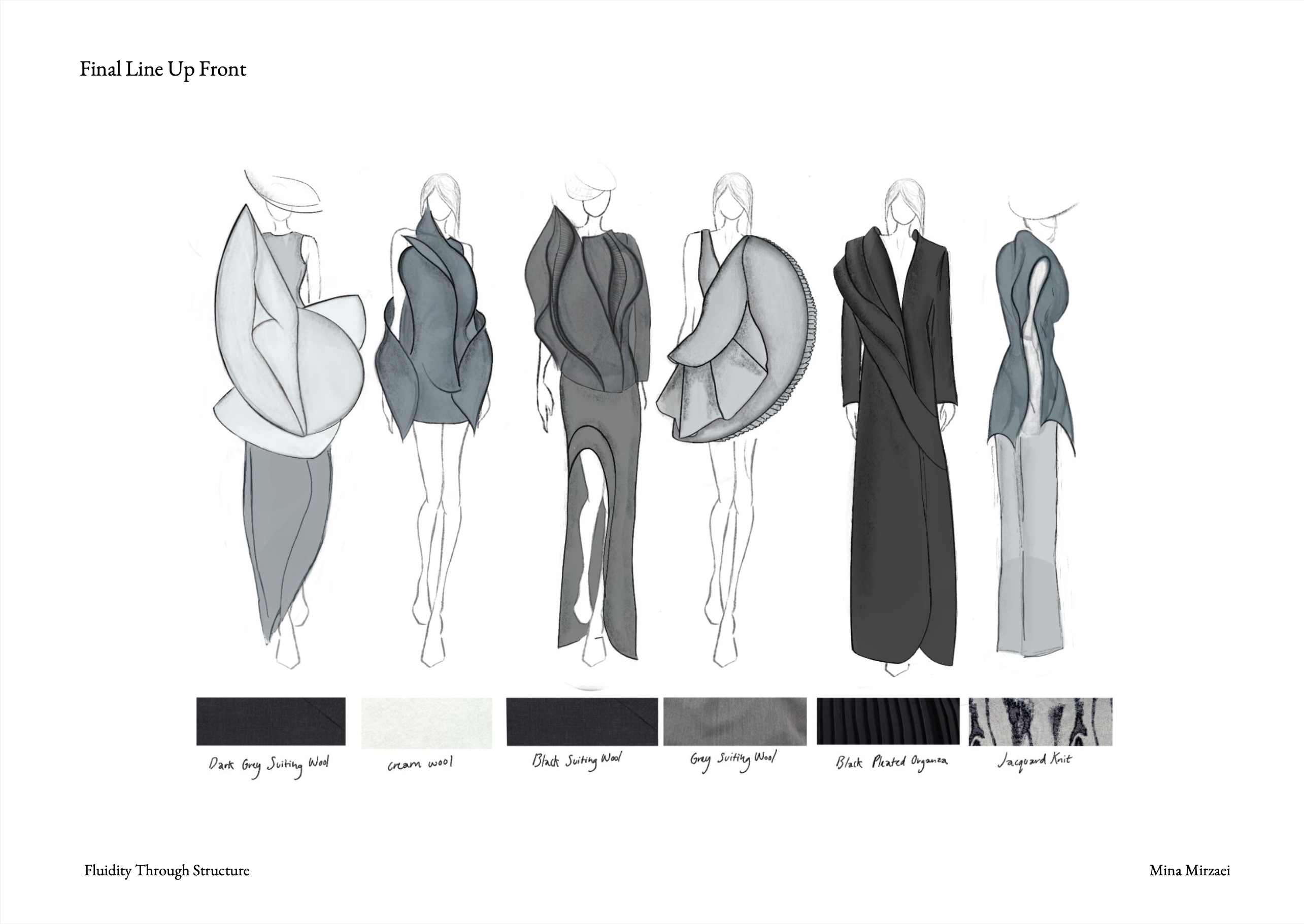
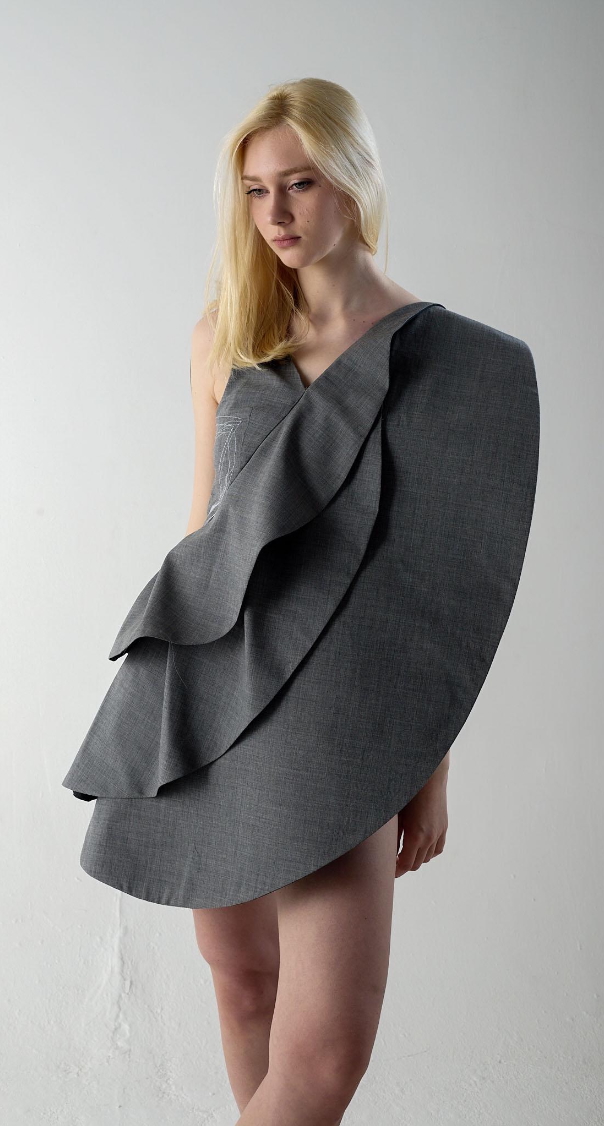
This project investigates the intersection of 1950s women’s tailoring and the sculptural principles of Russian sculptor Naum Gabo, (1890 – 1977) exploring how historical and personal research can inform contemporary womenswear design. It focuses on how garments can articulate a sense of motion through silhouette, and structural composition, using visual and spatial language to create continuity within tailored form. The collection aims to synthesise precision tailoring with sculptural motion, producing garments that exist between clothing and constructed form. The 1950s marked a transformative period in women’s fashion, characterised by a return to structure and elegance. The influence of Christian Dior’s New Look established silhouettes defined by cinched waists, sculpted hips and strong shoulders, a post war effort to bring back feminine ideals and take women out the workspace. As Steele (1998) discusses, this period reflected broader cultural desires, “during the first world war, simplicity of dress had become bonton, as it seemed only suitable to adopt a look of seriousness and subdued elegance under increasingly tragic circumstances.” (p.247). This is evident in the restrictive nature of 1950s tailoring, where structure often limited natural movement. However, it was Naum Gabo’s sculptures which became more important to the development of my ideas. I liked the contradiction of the rigidity of materials; the object itself doesn’t move but it appears fluid. This project critically reinterprets these conventions by maintaining the precision and discipline of 1950s tailoring while challenging its static nature. Rather than replicating historical silhouettes, I've used pattern cutting to rework the structure, and I’ve used dart manipulation to create new lines in the seams. The conventional darts are straight, but I’ve curved them to introduce more movement. While tailoring will always control the body to some extent, I’ve attempted to echo Gabo’s Linear Construction No 2 by creating a continuity of line as one views the garment from different perspectives. As Caroline Evans (2003) notes, contemporary fashion increasingly operates at the boundary between clothing and conceptual object, where form and meaning are prioritised alongside wearability. “fashion thus has an important role to play, not merely in adorning the body but also in fashioning a modern, reflexive self.” (p.6). This perspective supports the collection’s positioning between tailoring and sculptural experimentation.