Alice Rugman


Scroll to explore
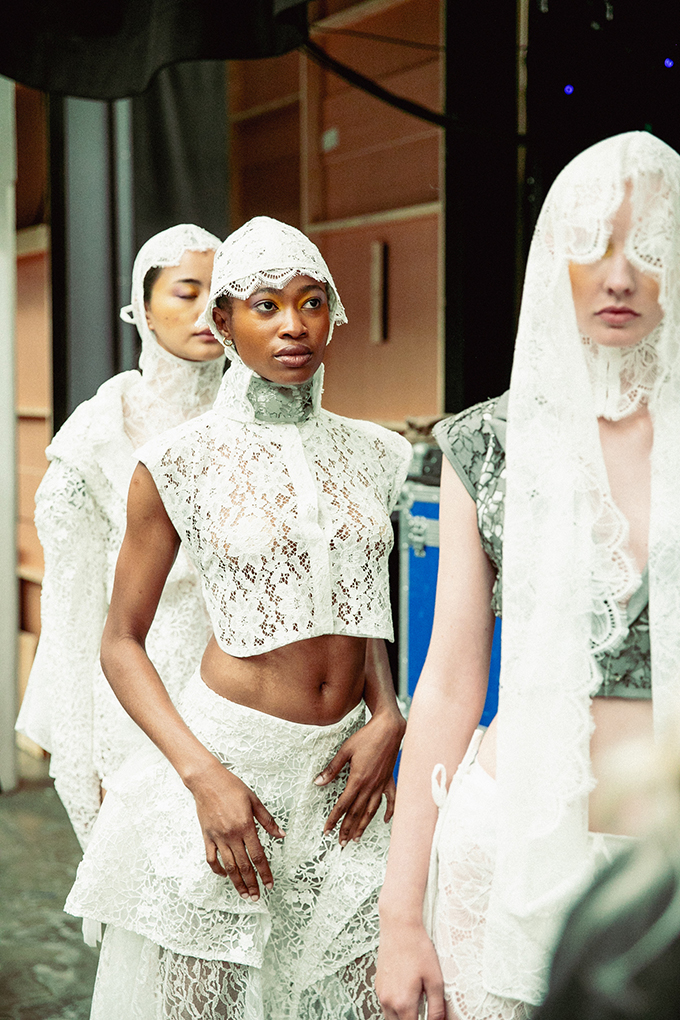
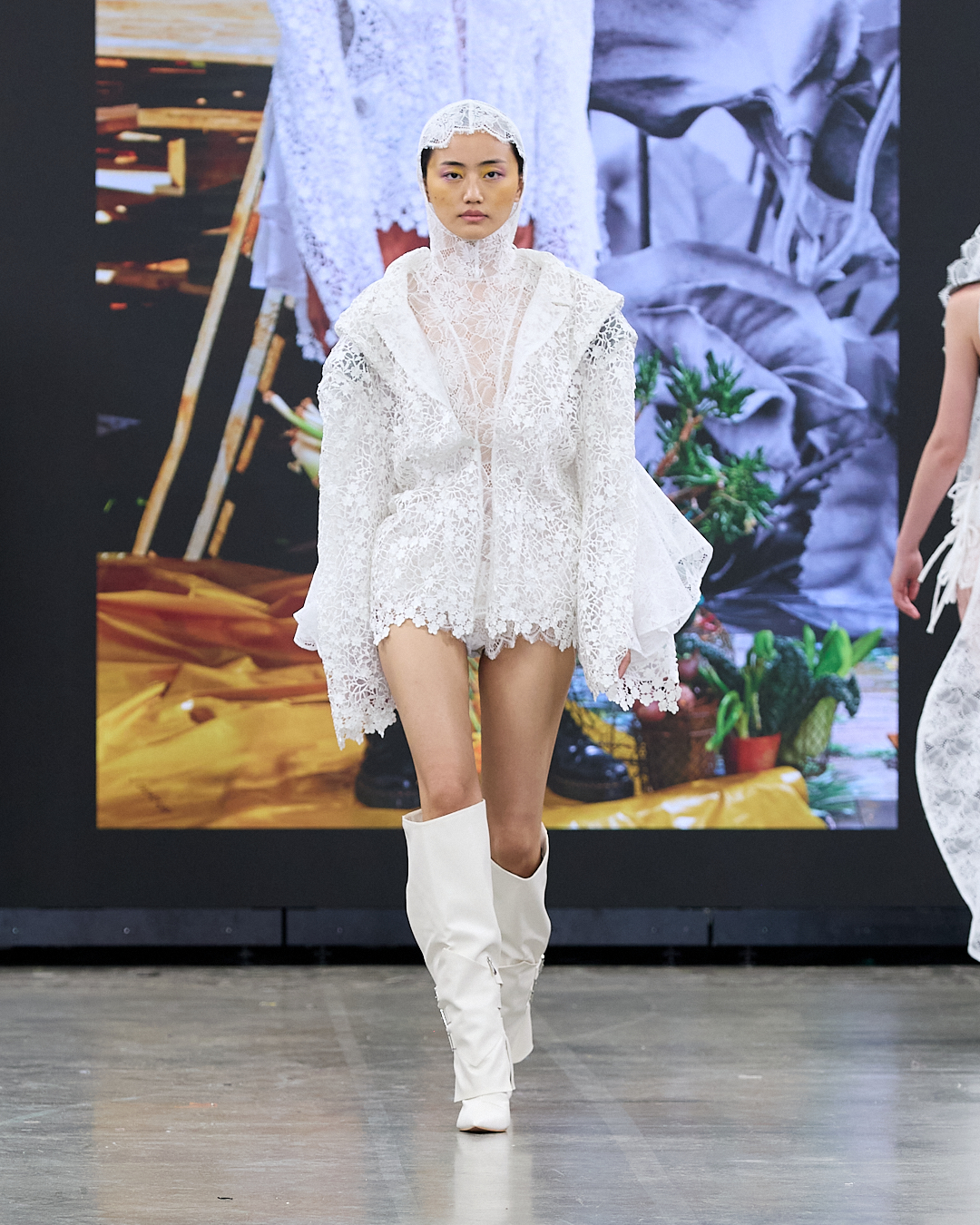
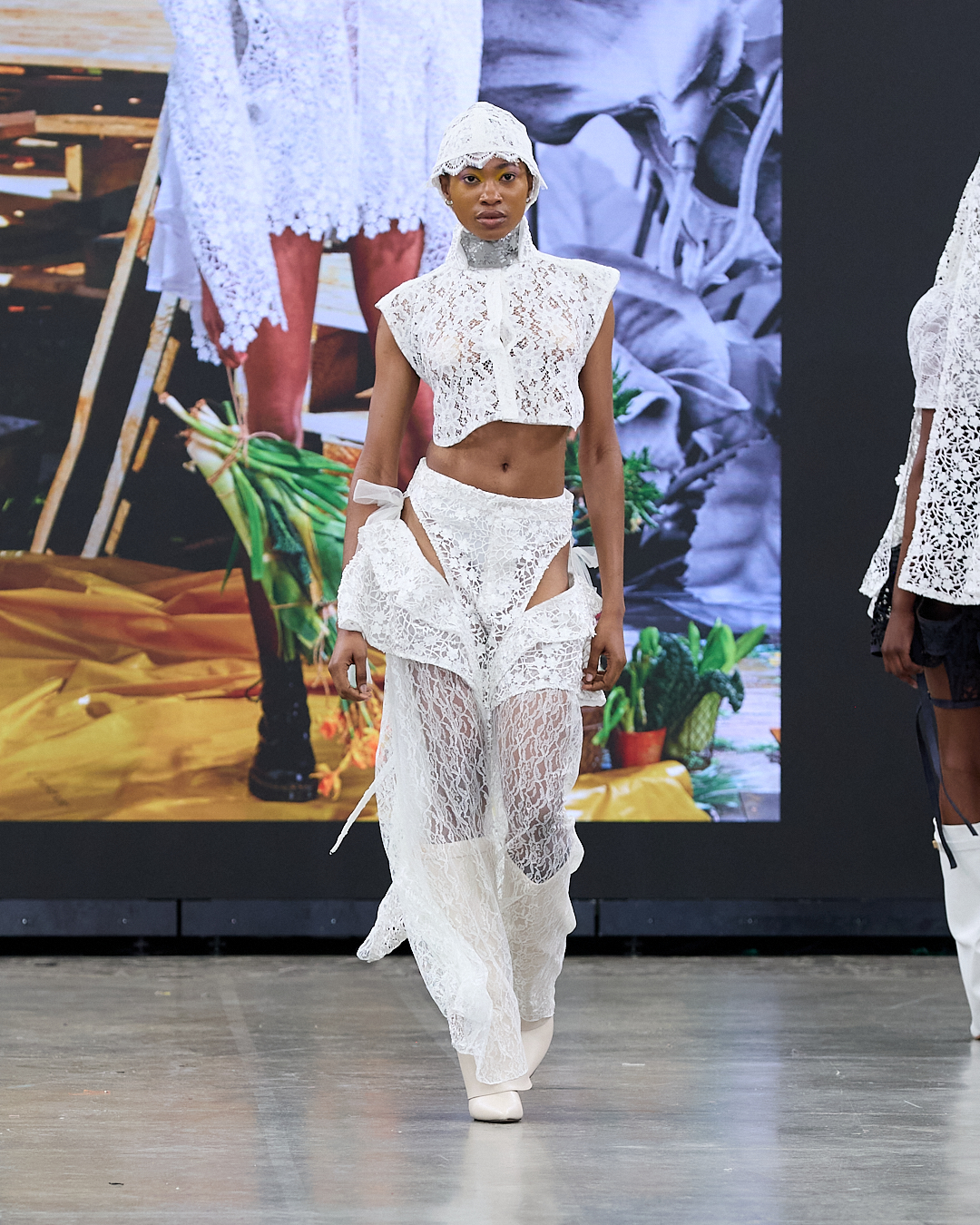
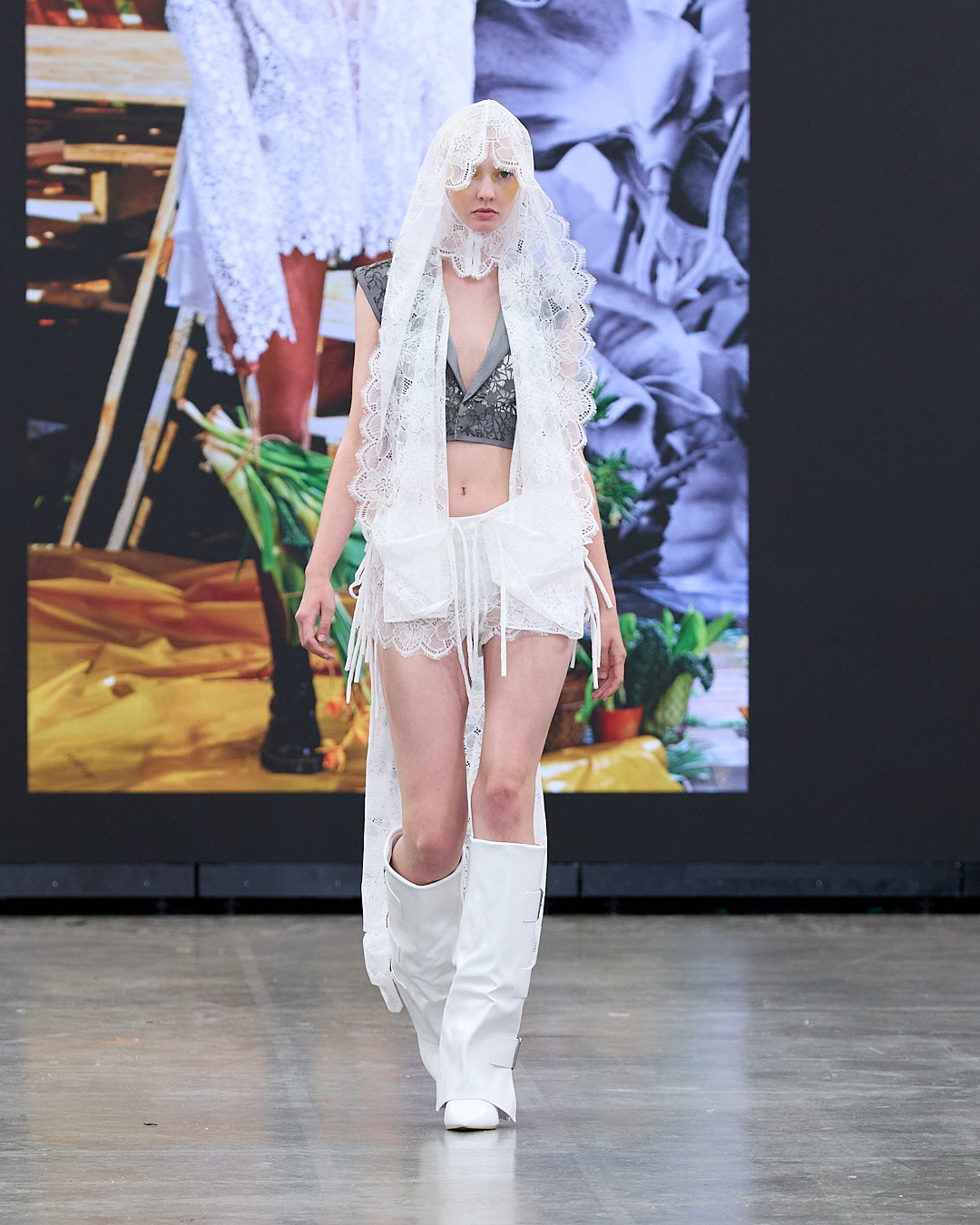
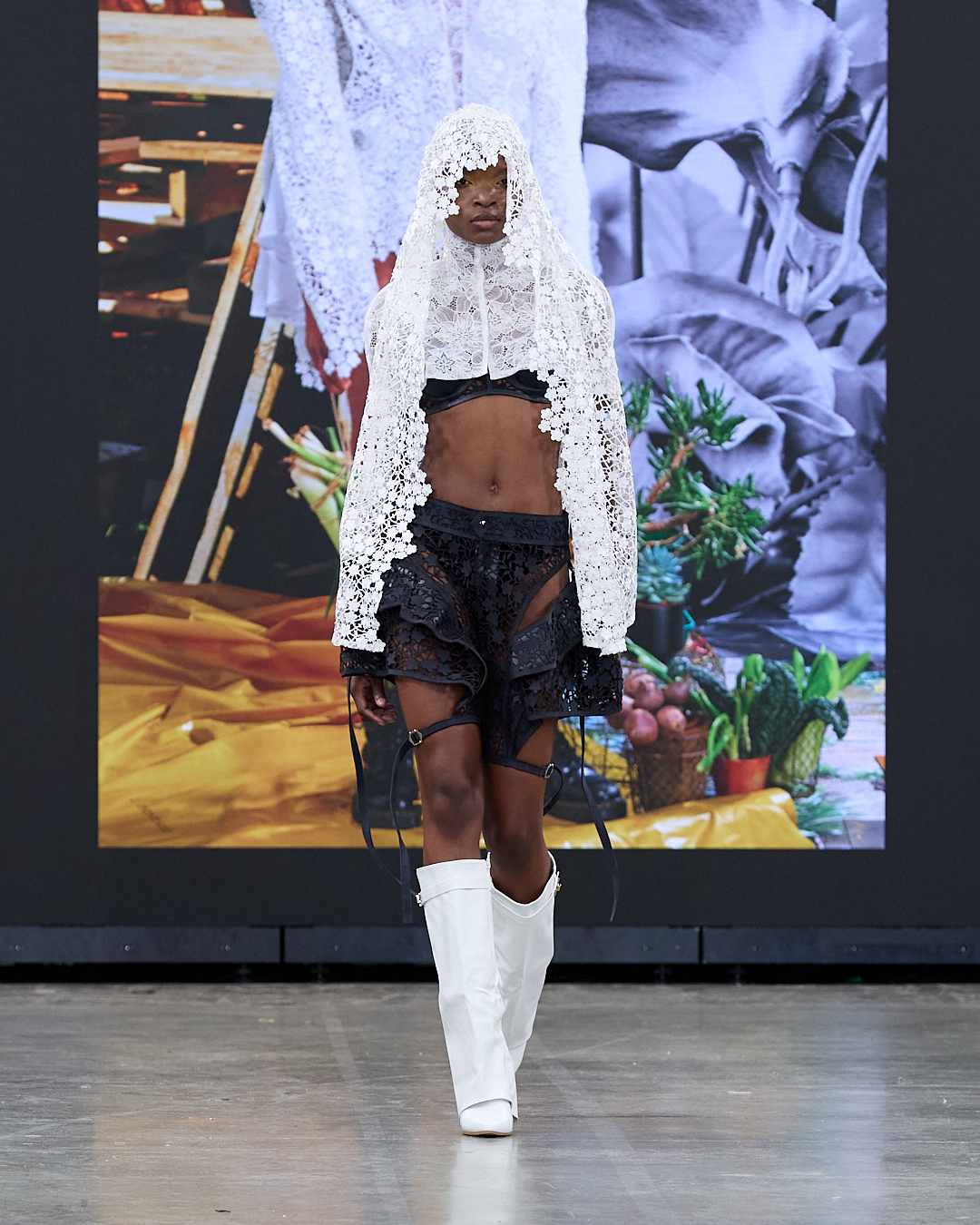
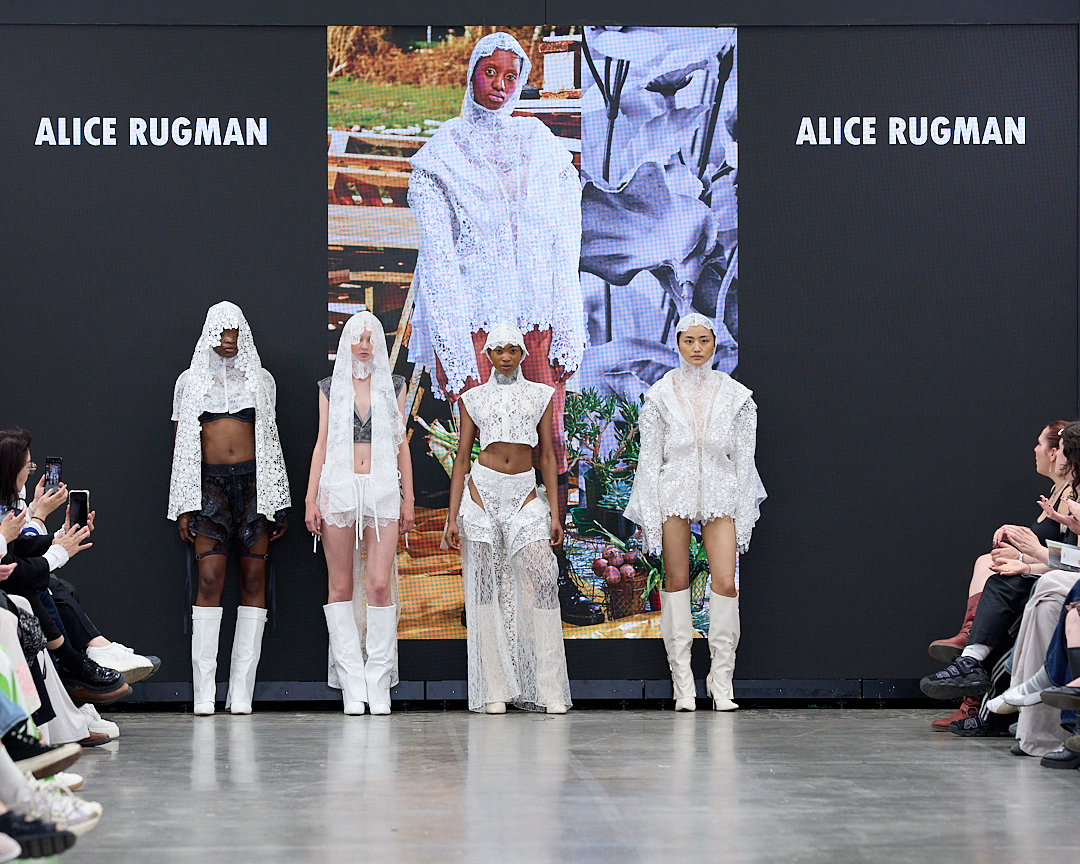
'Sinners Wear White' - This collection is a deeply personal exploration of faith, identity and belonging, shaped by my experience of growing up queer within a religious household. Rooted in the visual language of Christian ceremony and tradition, the work reimagines garments associated with purity, devotion and conformity through a contemporary queer lens. By drawing on references to Sunday Best dressing, christening gowns, First Communion attire and wedding dresses, I challenge the expectation that faith and queer identity must exist in opposition. Instead, I use fashion to assert that it is possible to be both Christian and a gay woman, embracing all aspects of identity without compromise. The collection combines delicate lace with laser-cut leather, creating a dialogue between softness and strength, vulnerability and resistance. Traditional white lace, often associated with innocence and religious ritual, is transformed through unexpected silhouettes and revealing constructions. Veils cascade over the body, evoking ceremonial dress while simultaneously concealing and revealing, questioning who is permitted visibility within religious spaces. Laser-cut leather introduces a contrasting edge, disrupting the romanticism of the lace and symbolising acts of rebellion against heteronormative expectations and restrictive interpretations of faith. Visually, the collection balances reverence with defiance. The predominantly white palette references sacred garments and rites of passage, while cropped proportions, exposed layers and unconventional styling subvert traditional ideas of modesty and femininity. The intricate lace textures create an ethereal quality, while structured leather panels add contemporary strength and attitude. These contrasts reflect the tension between inherited beliefs and self-acceptance, tradition and transformation. Inspired by the unapologetic confidence of contemporary queer icons such as Chappell Roan, the collection celebrates self-expression as an act of resilience. Each garment becomes a form of reclaiming space within a culture that has often marginalised queer voices. Rather than rejecting faith, this work seeks reconciliation, proposing a future in which religious belief and queer identity coexist. Through craftsmanship, symbolism and material contrast, the collection tells a story of liberation, visibility and the courage to belong authentically.