Jianhong Cheng

Scroll to explore
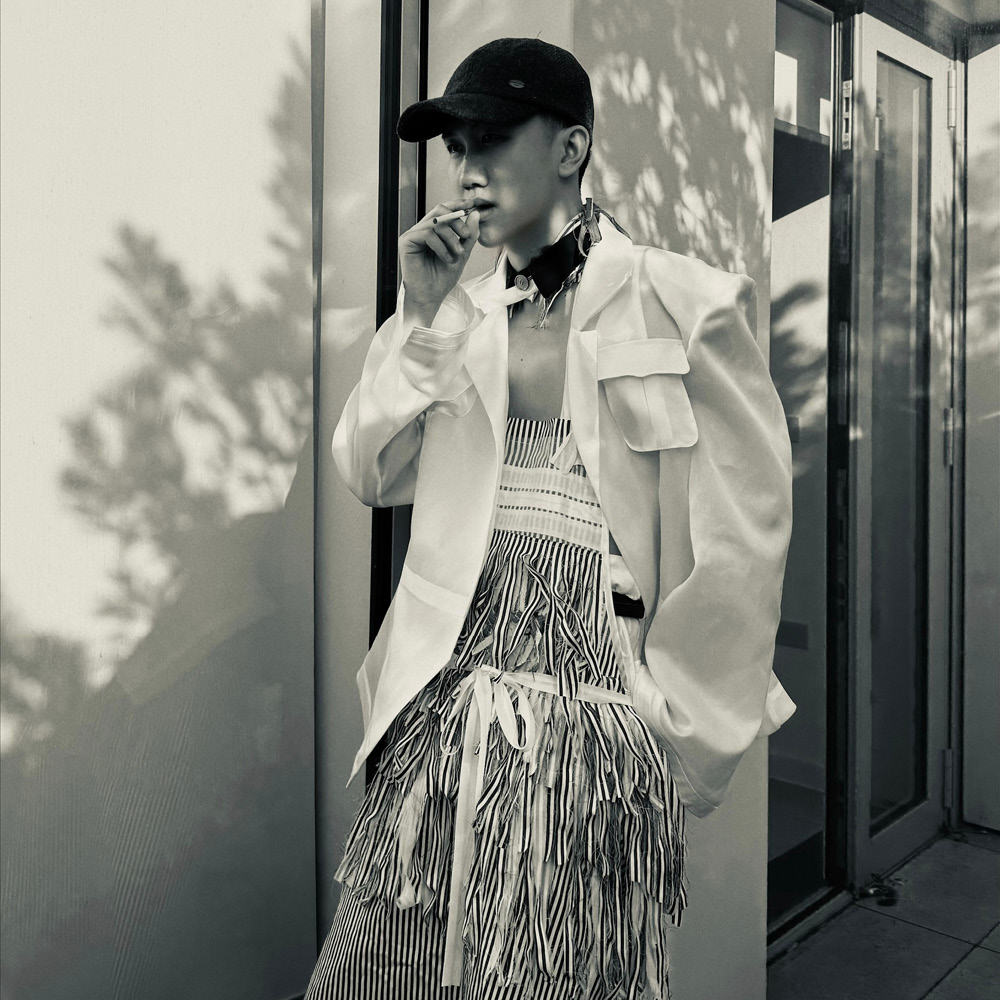
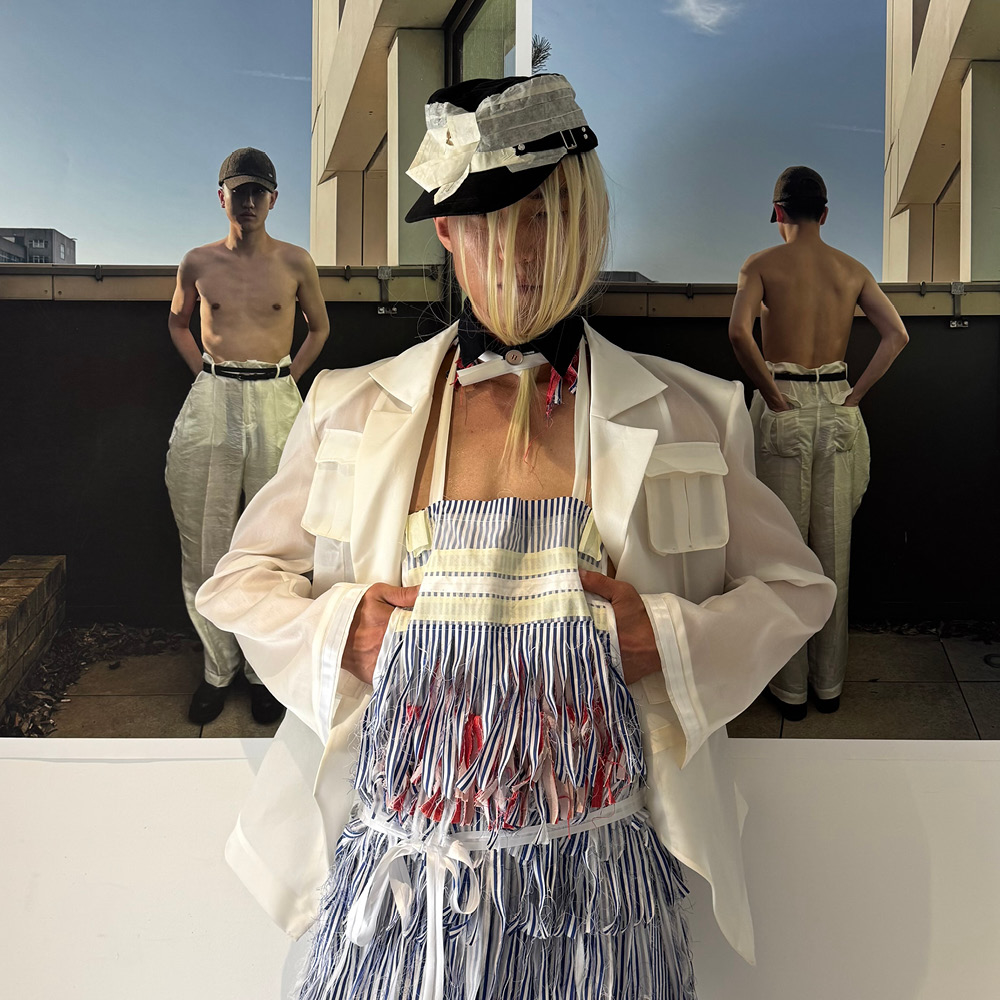
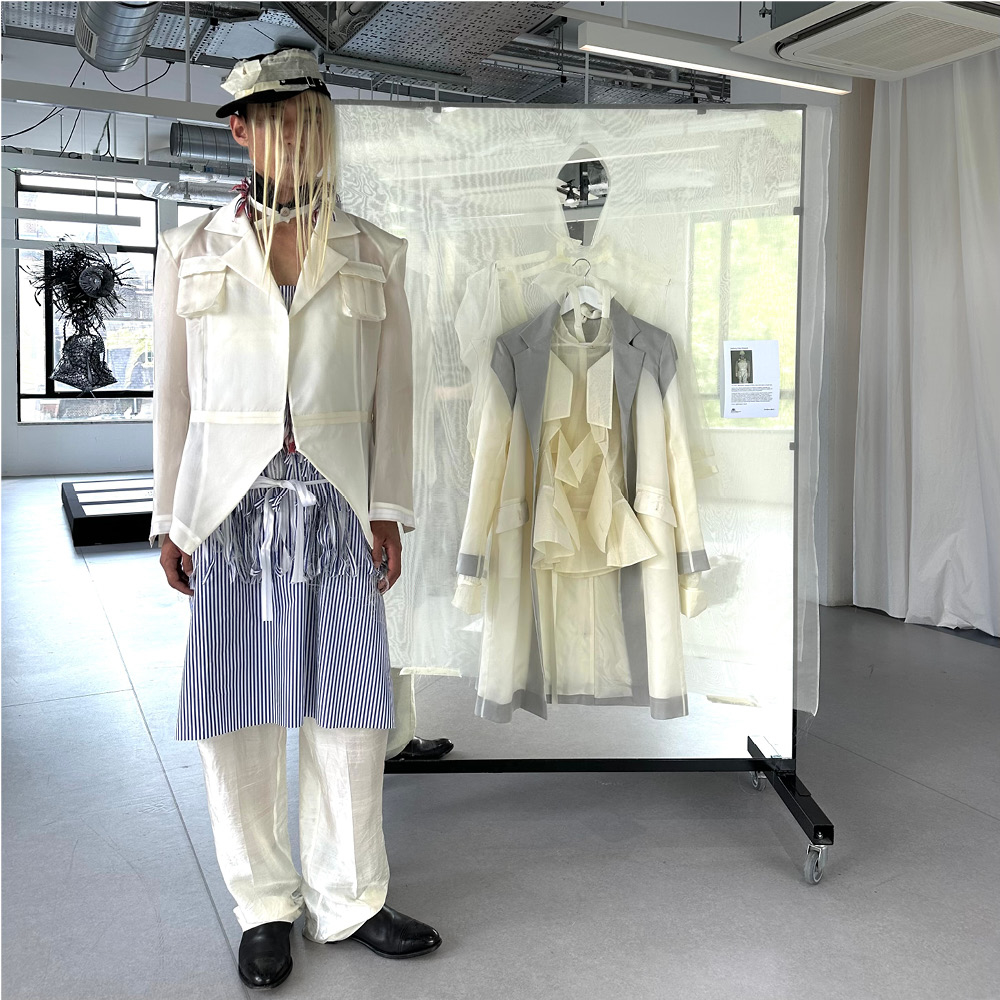
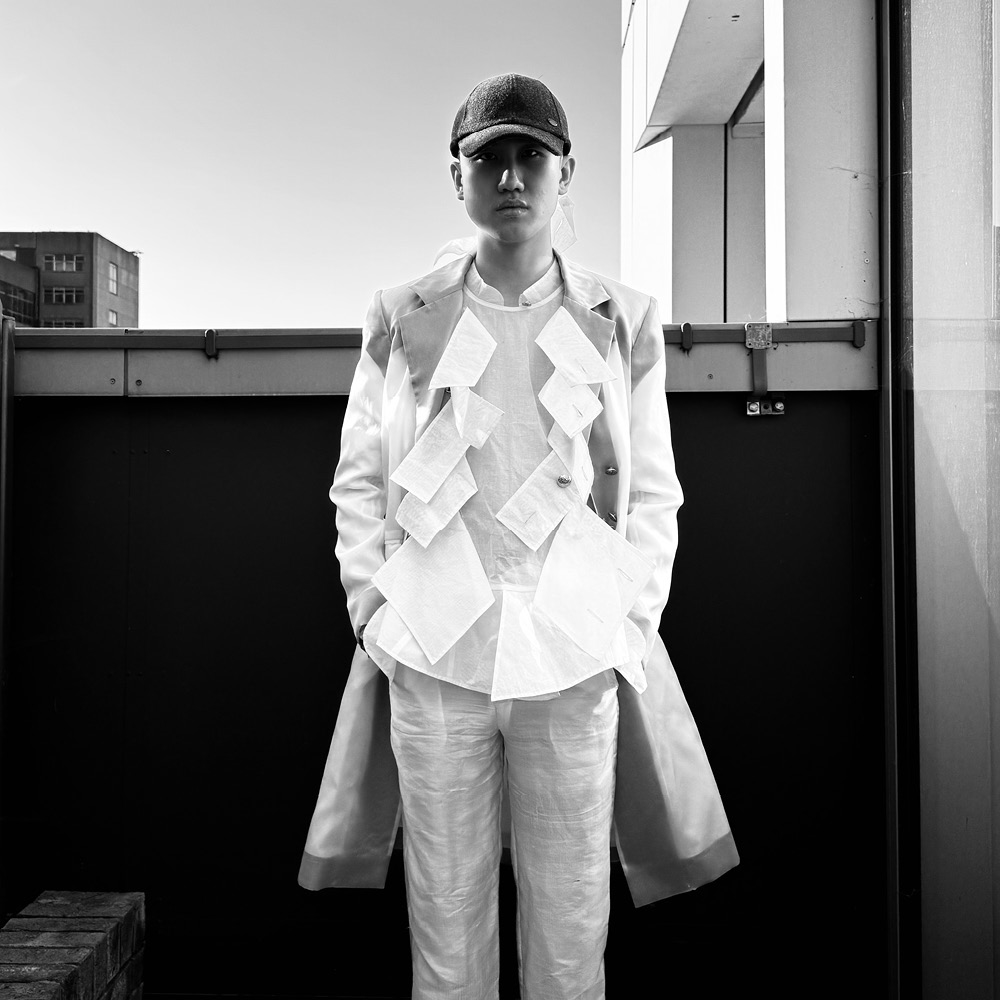
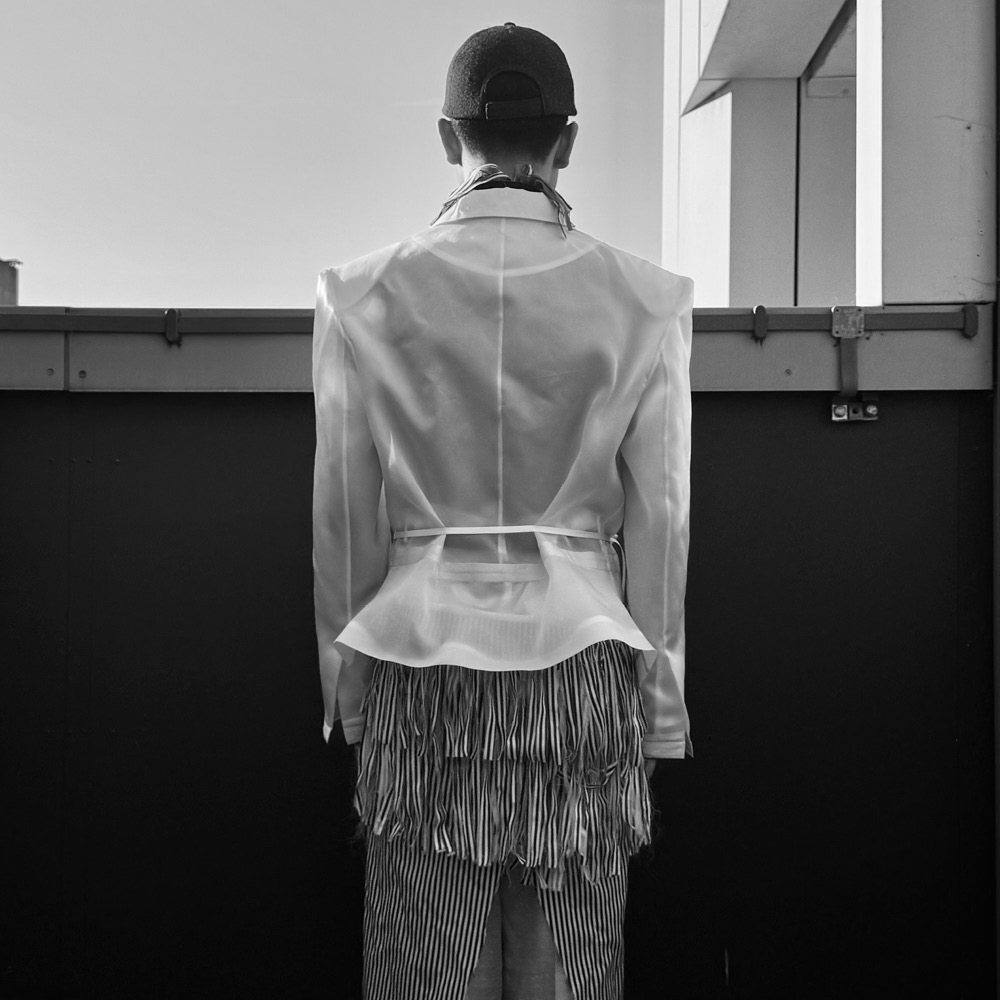
Misrecognition explores how clothing shapes the way we recognise and understand identity. Drawing from my experience of migration, the project looks at identity not as something fixed, but as something that is constantly negotiated through the social meanings attached to dress. Military and chef uniforms form the starting point of the work. Both carry strong visual codes that immediately position the wearer within familiar systems of authority, labour and discipline. By combining, fragmenting and reconstructing these garments, I disrupt those systems of recognition, creating forms that feel familiar yet difficult to define. Working with transparent silk, cotton uniform fabrics and paper tape, I use layering to reveal and conceal the body at the same time. The garments never settle into a single identity. Instead, they exist between categories, where certainty begins to dissolve and recognition becomes unstable. Rather than disguising the wearer, the work asks what happens when the visual language we rely on to identify people no longer functions as expected. When uniforms lose their clarity, identity also becomes open to interpretation. In this space of uncertainty, clothing is no longer simply a marker of profession or status, but a site where multiple identities can overlap, shift and remain unresolved. Misrecognition reflects my ongoing interest in how identity is continually produced through social interaction rather than existing as something complete or permanent.